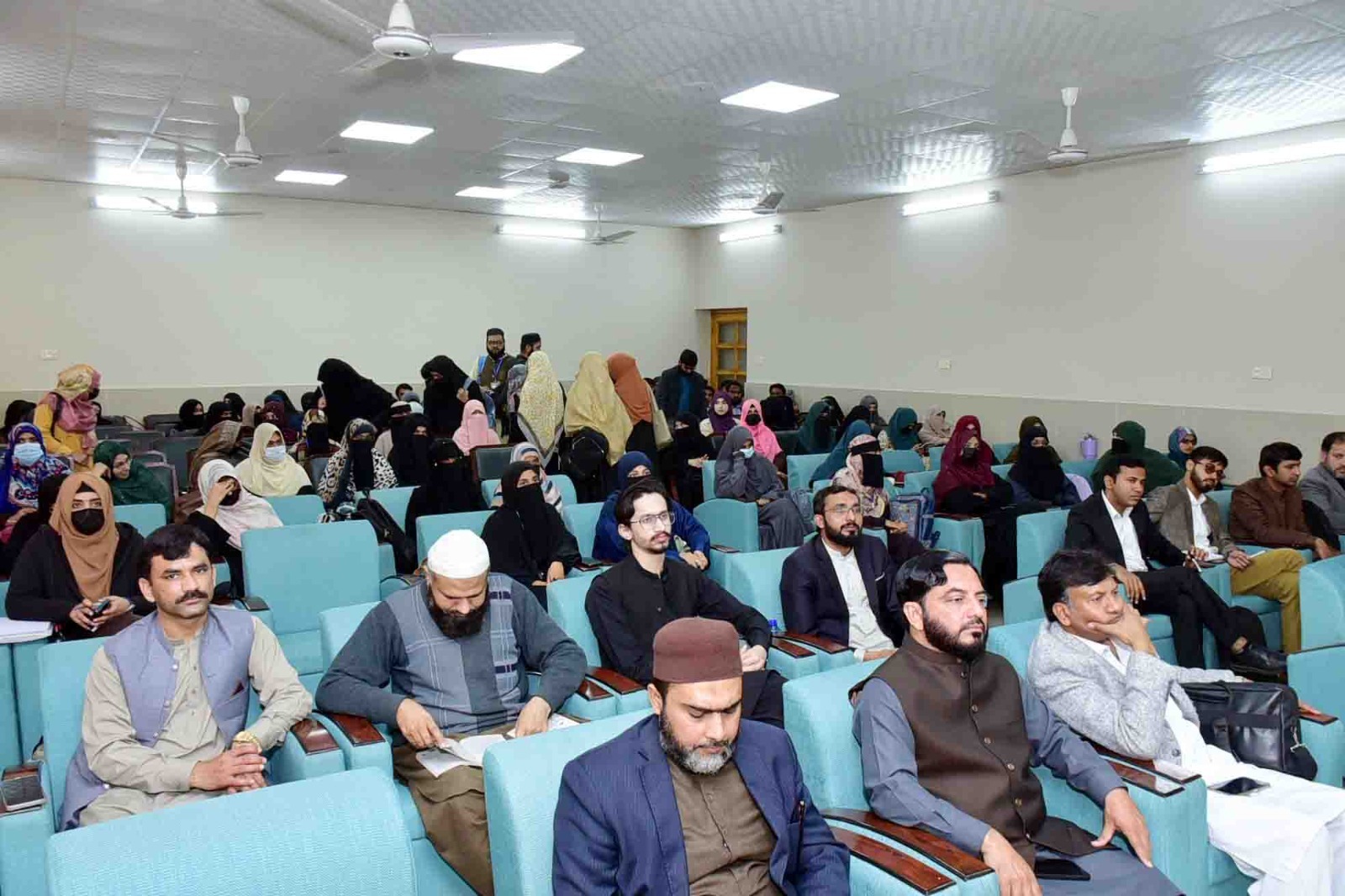
Government College University (GCU) Faisalabad observed the International Day for Countering Violence and Extremism on 12 February 2026 with a national seminar and an awareness walk held on campus.
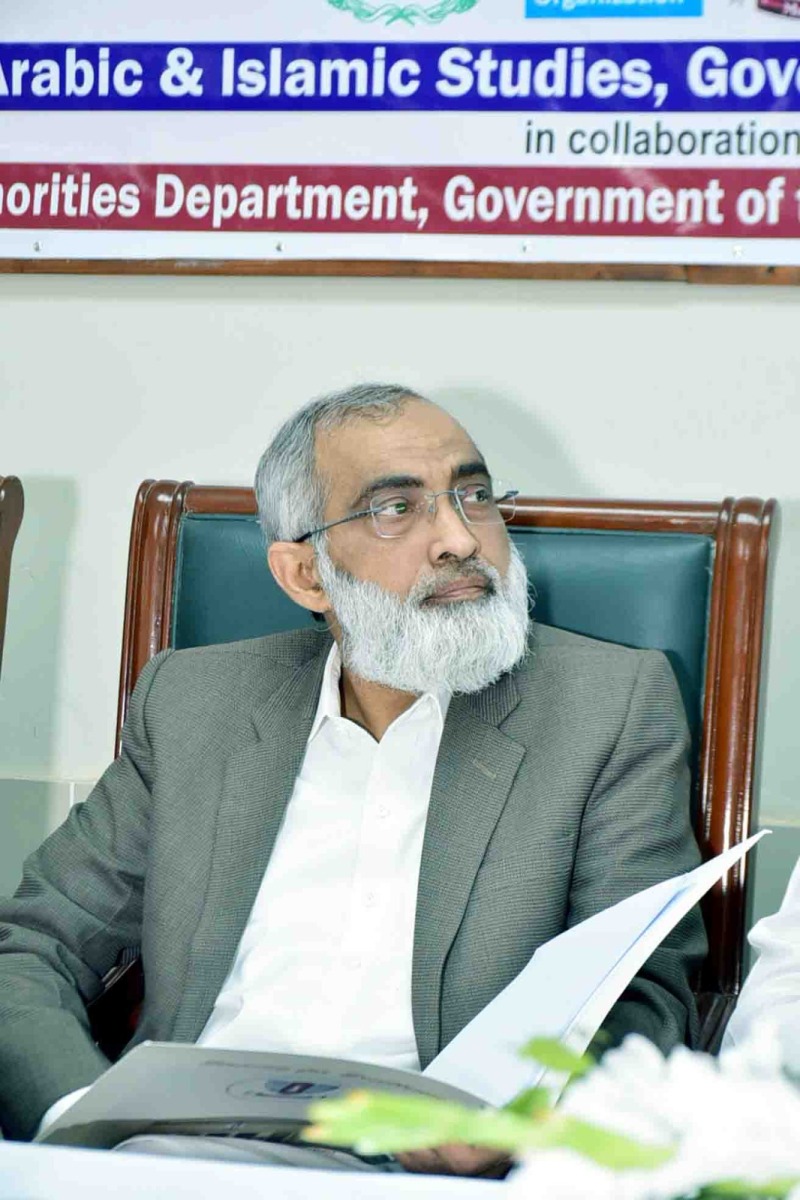
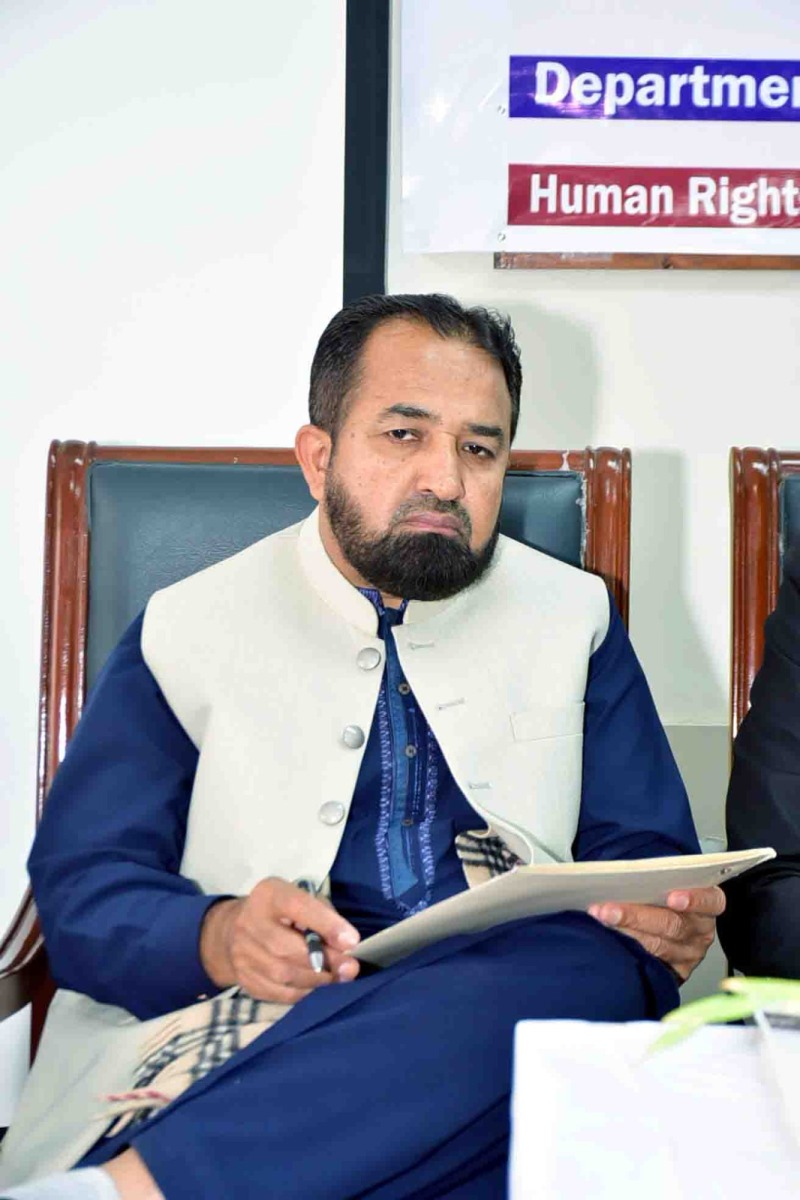
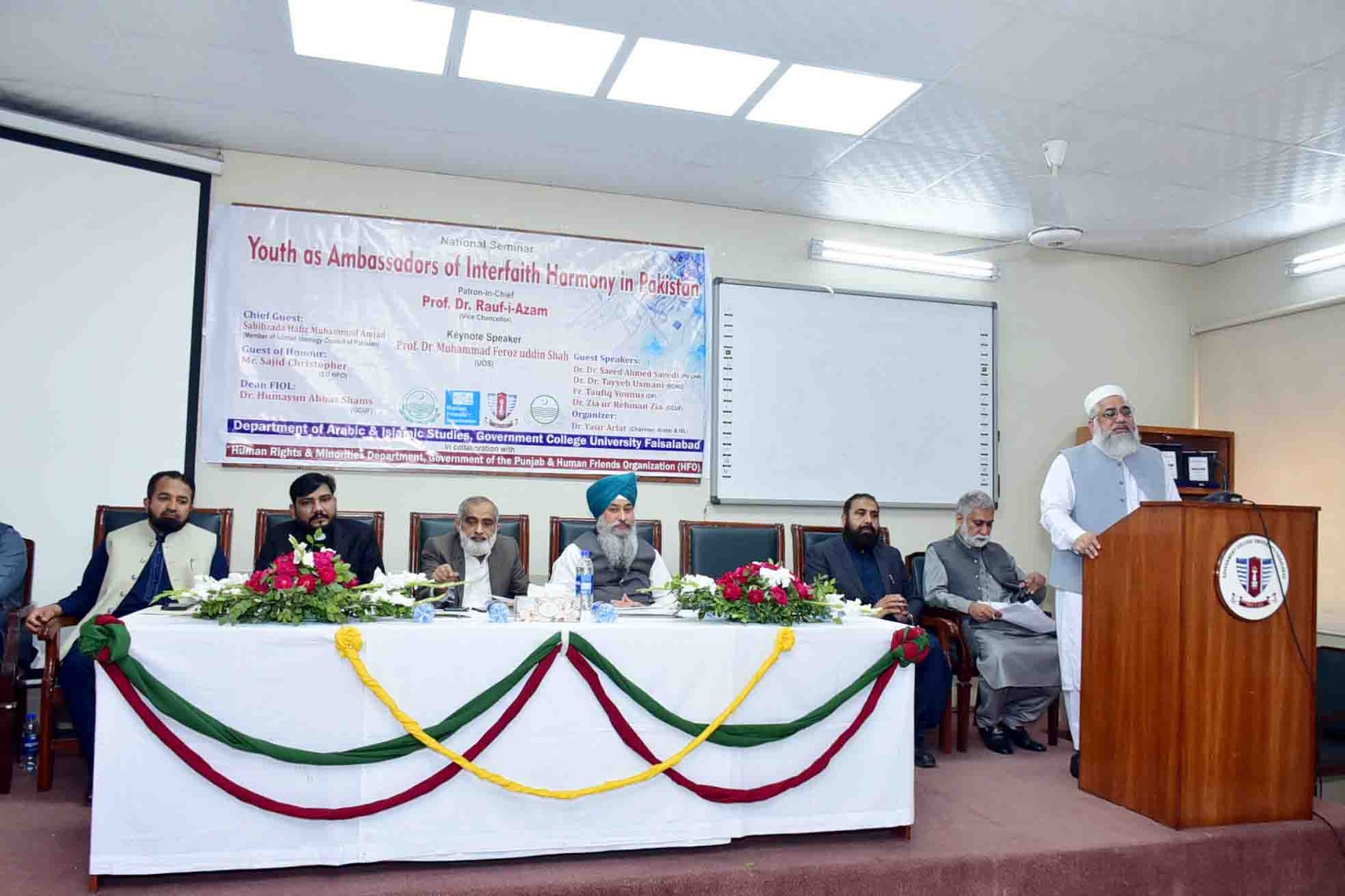
The seminar, titled “Youth as Ambassadors of Interfaith Harmony in Pakistan,” was organized by the Department of Arabic & Islamic Studies in collaboration with the Government of Punjab’s Human Rights and Minorities Affairs Department and the Human Friends Organization (HFO).
Welcoming the distinguished guests, Dr. Yasir Arafat, Chairman of the Department of Arabic & Islamic Studies, outlined the objectives of the event. He stated that the seminar was organized in connection with the International Day for Countering Violence and Extremism as well as World Interfaith Harmony Week 2026. He added that the initiative also aligned with the United Nations Sustainable Development Goals, particularly the goal of promoting peace, justice, and strong institutions.
Dr. Yasir noted that the seminar focused on youth in light of the Punjab Government’s declaration of 2026 as the Year of Youth by the Honorable Chief Minister, Maryam Nawaz Sharif. He expressed his gratitude to the Vice Chancellor, Prof. Dr. Rauf-i-Azam, for expanding the scope of the seminar and encouraging participation from students across the university. He also thanked Mr. Sajid Christopher, CEO of Human Friends Organization, for his valuable collaboration and support.
Among the keynote speakers, Dr. Tayyab Usmani, Chair of Islamic Studies and Interfaith at Baba Guru Nanak University, Nankana Sahib, emphasized the need to reform traditional curricula and teaching methodologies in religious studies. He stressed the importance of engaging directly with primary religious texts and critically revising colonial-era terminologies that continue to influence academic discourse. He also highlighted the significance of learning the languages of other faith traditions to promote meaningful interfaith understanding. Furthermore, he underscored the need to introduce activity-based learning approaches to effectively respond to and counter extremist trends within educational institutions and society at large.
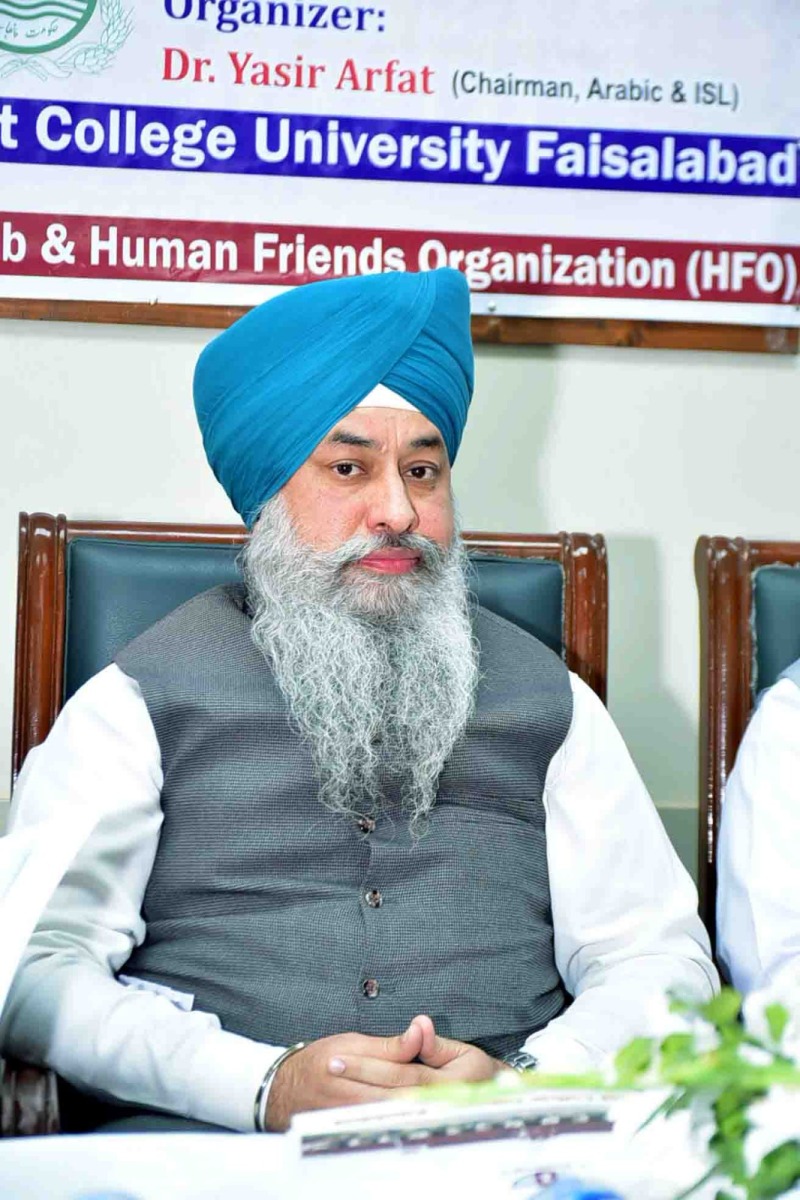
Representing the Sikh community, Sardar Hakim Narinder Singh thanked the University for the Invitation. Referring to Sikh teachings, he emphasized mutual tolerance and described Pakistan as a shared and cherished homeland that must be preserved collectively. He called for practical strategies to reduce extremism and discourage extremist behavior in society.
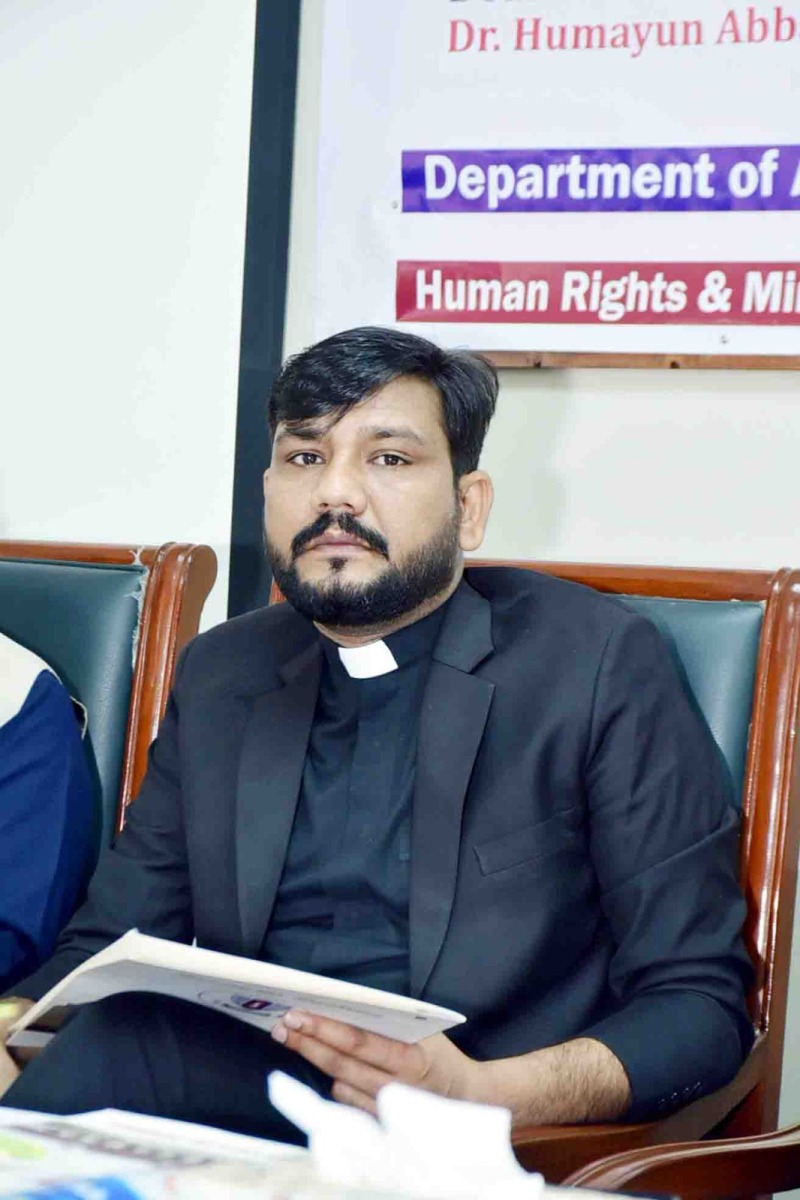
Christian scholar and researcher Father Toufiq Younis, a graduate of Al-Azhar University, stressed that educational and training systems must be intellectually and practically reformed in accordance with contemporary needs. He urged youth not to form opinions based on hearsay but to learn directly from others about their beliefs and perspectives. He emphasized that Christianity and other religions reject extremism in both thought and action and called for promoting the authentic teachings of faith traditions. He appreciated the university’s efforts and expressed hope for continued interfaith engagement.
Delivering the keynote address, Prof. Dr. Muhammad Ferozuddin Shah Khagga (University of Sargodha) highlighted that diversity and difference are inherent aspects of nature and contribute to the beauty of the world. Drawing upon Qur’anic verses, Hadith, and scholarly interpretations, he clarified the distinction between disagreement and conflict. He referenced the Prophet Muhammad’s (peace be upon him) hospitality toward the delegation of Najran at Masjid an-Nabawi, emphasizing that Muslims must open their hearts to people of other faiths and uphold the true spirit of religion. He reiterated that Islam promotes balance and moderation and leaves no space for extremism. He thanked Dr. Yasir and the University for bringing together scholars of three religions with the younger generation.
Dr. Saeed Ahmad Saeedi, Chairman of the Department of Islamic Studies at the University of the Punjab, outlined practical guidelines for fostering interfaith tolerance among youth. Drawing examples from Sufi traditions, he highlighted the humanitarian dimensions of Islam and stressed the need to modernize teaching approaches to effectively engage the new generation.
Dr. Zia ur Rahman Zia, Interfaith Harmony Focal Person at GCU Faisalabad, referred to directives from the Punjab Higher Education Commission and stated that such initiatives would continue regularly, reflecting the university’s commitment to its academic and social responsibilities.
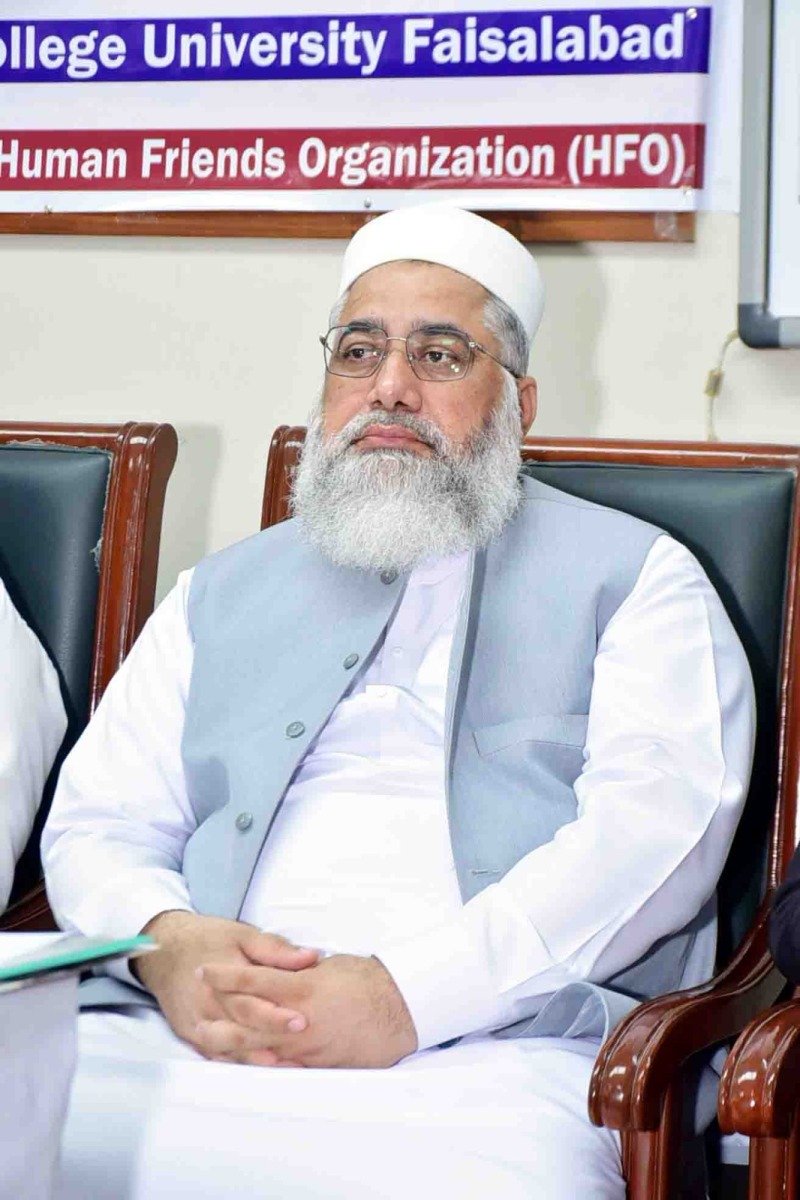
The Chief Guest, Sahibzada Hafiz Muhammad Amjad, commended the department and university leadership for organizing the seminar on such a significant issue. He emphasized the urgent need to instill tolerance, patience, and coexistence among youth in practical ways and to collectively counter extremist attitudes within society. Referring to Paigham-e-Pakistan—a consensus-based declaration developed by university scholars, religious leadership, and state stakeholders to counter violent extremism—he called for collective efforts to eliminate all forms of extremism.
Guest of Honor and Dean of the Faculty of Islamic and Oriental Learning, Prof. Dr. Humayun Abbas Shams, praised the department for organizing a meaningful academic event. He emphasized that cooperation should be grounded in shared human values and called for dialogue not only between religions but also among different sects. He thanked all guests and participants for their valuable contributions.
At the conclusion of the seminar, an awareness walk was organized on campus in which faculty members, students, and representatives from different faith communities actively participated. During the walk, a special message from the Vice Chancellor, Prof. Dr. Rauf-i-Azam, was shared, reaffirming the university’s commitment to working collectively to overcome violent extremism in society and across the country. He highlighted that the participation of representatives from the Christian and Sikh communities symbolized a shared resolve to confront challenges together and transform them into opportunities for building a peaceful and harmonious environment.